
Generating Next-Gen International Lawyers info@bsil.bd

05BSIL Lecture Series

Seeking Justice for the ‘Stateless’

International Legal Accountability, ICJ Proceedings, and State Responsibility in the Rohingya Crisis

  • Saturday, 31 October 2026
  • 3:00 PM Bangladesh Time
  • Online on Google Meet
700,000+Rohingya forced to flee to Bangladesh in 2017
~1 millionRohingya refugees hosted in Cox's Bazar today
15 to 1ICJ vote confirming The Gambia's standing (2022)
3 tracksICJ, ICC and universal jurisdiction

About the lecture

When statelessness becomes an instrument of persecution

The Bangladesh Society of International Law (BSIL) is organising this lecture webinar to examine critically how international law responds to mass atrocity against a population that has been deprived of nationality, and whether the available accountability mechanisms can deliver justice to the Rohingya.

Statelessness is not only a consequence but also an instrument of persecution. Myanmar's 1982 Citizenship Law excluded the Rohingya from the recognised national races and left them without effective legal protection. Without citizenship, victims are deprived of diplomatic protection and have no state to advocate on their behalf. Responsibility must therefore be pursued through alternative routes: inter-state litigation under the Genocide Convention, international criminal jurisdiction, and national proceedings based on universal jurisdiction.

Bangladesh now hosts around one million Rohingya refugees in Cox's Bazar, while humanitarian funding has fallen well short of needs. No effective repatriation has taken place, and conditions in Rakhine State have worsened amid renewed armed conflict.

The Court held that all States parties share a common interest in preventing genocide, so any of them, not only a specially affected state, may invoke another's responsibility.Summary of the ICJ's reasoning, The Gambia v Myanmar (Provisional Measures, 2020)

Background

The road to accountability

From the denial of citizenship to proceedings in The Hague and Buenos Aires.

  1. 1982

    Citizenship Law

    Myanmar's Citizenship Law leaves the Rohingya out of the recognised national races, stripping them of effective legal protection.

  2. August 2017

    "Clearance operations"

    Military operations in Rakhine State force more than 700,000 Rohingya to flee into Bangladesh.

  3. 6 September 2018

    ICC jurisdiction

    An ICC Pre-Trial Chamber rules that the Court may exercise jurisdiction over deportation completed on the territory of Bangladesh, a State Party.

  4. 11 November 2019

    The Gambia v Myanmar

    Supported by the OIC, The Gambia institutes proceedings at the ICJ under the Genocide Convention, invoking obligations erga omnes partes.

  5. 23 January 2020

    Provisional measures

    The ICJ unanimously orders Myanmar to prevent genocidal acts and preserve evidence of the alleged crimes.

  6. 22 July 2022

    Jurisdiction confirmed

    The Court rejects all four preliminary objections and confirms, by fifteen votes to one, that The Gambia has standing.

  7. 27 November 2024

    Arrest warrant sought

    The ICC Prosecutor applies for an arrest warrant against Senior General Min Aung Hlaing for crimes against humanity.

  8. February 2025

    Universal jurisdiction

    A court in Argentina calls for arrest warrants in the first universal jurisdiction case concerning the Rohingya.

Three forums, three questions

Where responsibility is being pursued

International Court of Justice

State responsibility

In The Gambia v Myanmar, a state with no direct connection to the crimes invoked obligations erga omnes partes. The Court's treatment of genocidal intent, of the duties to prevent and punish, and of the link between sexual and gender-based violence and genocide is likely to shape how the Convention is read in future cases.
International Criminal Court

Individual criminal responsibility

Bangladesh's status as a State Party opened territorial jurisdiction over deportation, leading to the Prosecutor's 2024 application for an arrest warrant.

National courts

Universal jurisdiction

Courts in Argentina have taken up the case, testing how far domestic courts can reach crimes committed abroad.

Gaps that remain

  • Enforcement
  • Victim participation
  • Reparation for a stateless population

Event objectives

What the lecture will cover

  1. 01

    Analyse the ICJ proceedings in The Gambia v Myanmar

  2. 02

    Clarify state responsibility and reparation for genocide

  3. 03

    Assess statelessness and access to justice for the Rohingya

  4. 04

    Connect the ICJ, ICC and universal jurisdiction tracks

Speaker and moderator

Who you will hear from

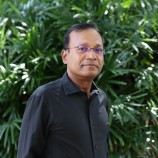
Professor Ahsan Ullah, PhD
Guest speaker

Professor Ahsan Ullah, PhD

International Studies and Global Migration, Faculty of Arts and Social Sciences, University of Brunei Darussalam

AKM Ahsan Ullah is Professor of Geography, Environment, and Development at the University of Brunei Darussalam (UBD). He has built an extensive research portfolio through positions and affiliations with institutions worldwide, including the City University of Hong Kong, the Institute of Population Health at the University of Ottawa, McMaster University, Saint Mary's University, Dalhousie University, the American University in Cairo, Osnabrück University and the Asian Institute of Technology.

A scholar and practitioner in migration, refugees and security, he works at the intersection of development, human rights and diplomacy to foster global cooperation.

Fahim Abrar Abid
Moderator

Fahim Abrar Abid

Founder and Executive Director, Bangladesh Society of International Law

Fahim Abrar Abid is an Erasmus Mundus scholar of International Law and Security (University of Glasgow, IBEI-Barcelona and University of Tartu), specialising in human rights. He consults UK and US law firms as a Country Expert on asylum matters and has provided over 45 expert opinions before the UK Immigration Tribunal and US Immigration and Citizenship Services.

His research has been published by Oxford University Press, Harvard ILJ, Cambridge ILJ, Brill, Routledge, Springer, Sage and Bloomsbury. He is Managing Editor of the Bangladesh Blog of International Law and is editing a two-volume Springer book, Bangladesh, International Law and Security in Post-July 2024.

Full profile

Registration

Reserve your place

Registration for this lecture closed on 30 October 2026. Follow BSIL for upcoming lectures and events.

Questions? info@bsil.bd

Registration closed

Thank you for your interest. Explore other lectures in the series.

View the Lecture Series

BSIL Lecture Series

Explore earlier lectures

From plastic pollution to enforced disappearance, climate obligations and sovereign equality.

All lectures